Psychological Support
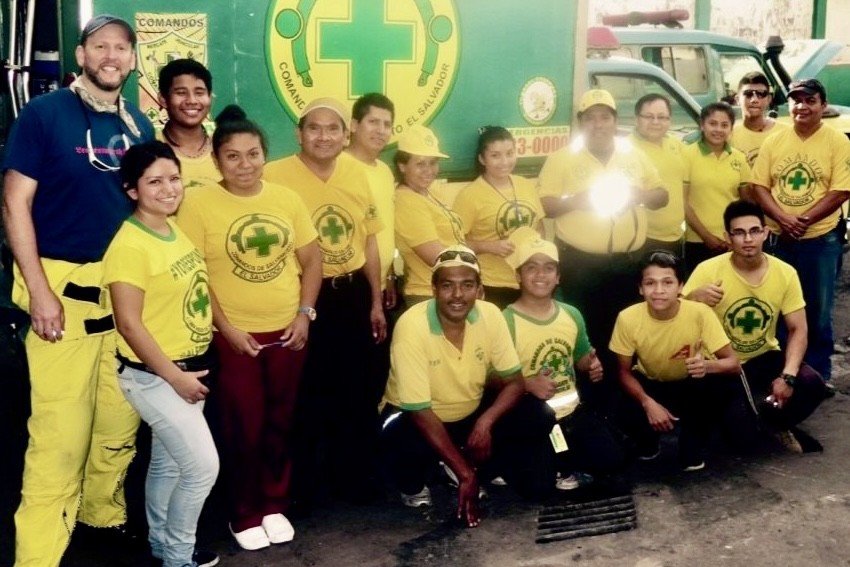
Members of Comandos de Salvamento (the Comandos) also need support. This page is for young and adult volunteers who want to talk about difficult experiences during rescues, accidents and other emergencies.
Support does not have to relate to an emergency or traumatic experiences during service. It can also address personal concerns, family difficulties, relationships, loss or other life challenges. Mark offers confidential support and has more than 18 years of experience as a therapist, as well as experience as a crisis responder.
Stress in emergency service
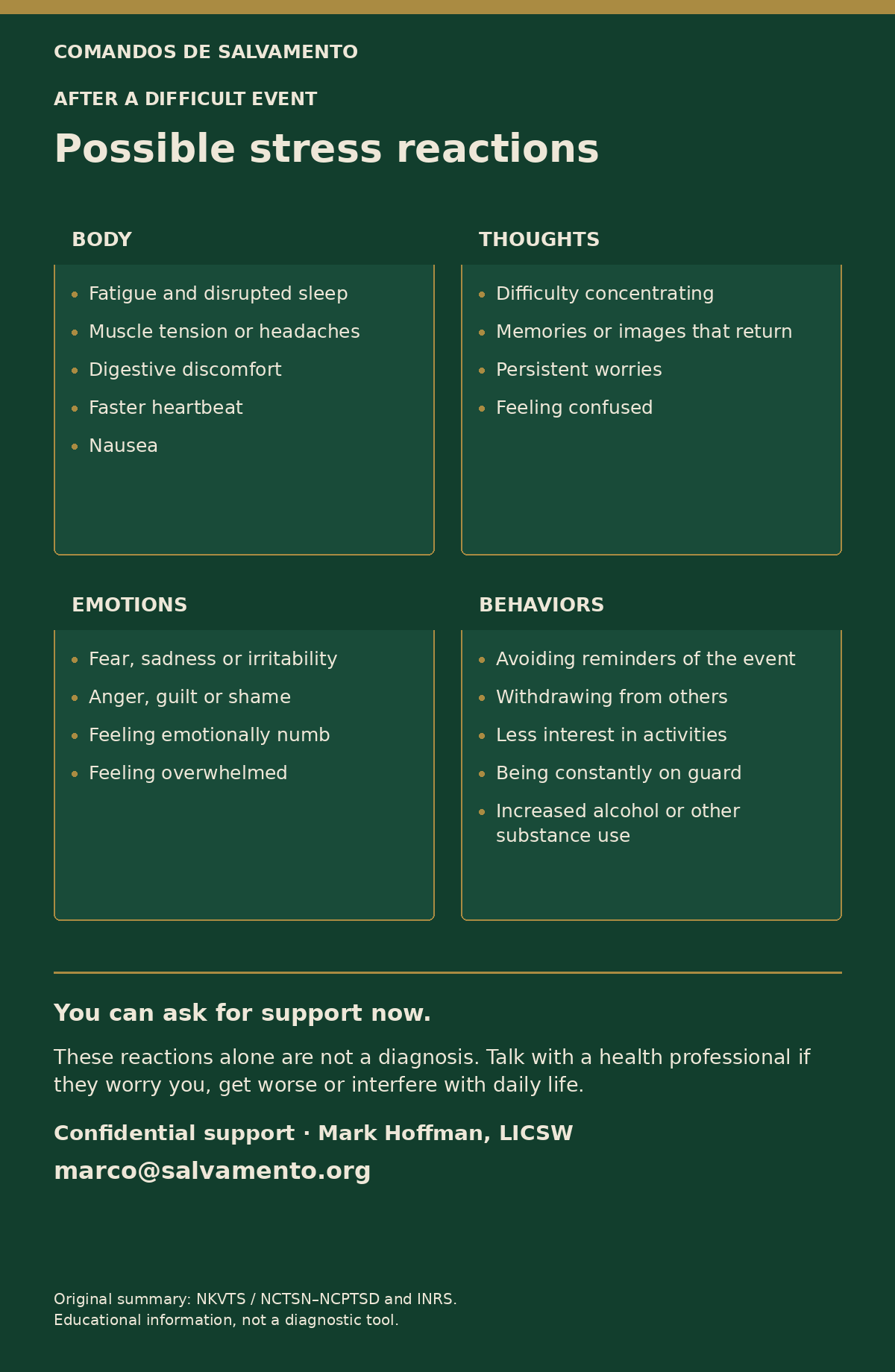
Dealing with serious injuries, deaths or the loss of colleagues can leave a lasting mark. After a difficult response, sleep problems, irritability, persistent memories or difficulty concentrating may arise. These reactions deserve attention and do not mean a lack of courage.
Strain and burnout
Demanding shifts and sustained stress can lead to burnout: exhaustion, distance from work and a sense of reduced effectiveness. Caring for the team includes rest, relief, reasonable workloads and access to support. If distress persists or affects daily life, professional care can help.
After a critical incident
Operational debriefing reviews what happened to improve the response. Structured psychological debriefing, known as CISD, is different: it is not recommended as an intervention to prevent post-traumatic stress. Emotional support should be voluntary, without forcing anyone to relive or recount details of the incident.
Support should respect each person’s language, beliefs, privacy and way of expressing grief. Family, faith and companionship can be resources if the person wishes. Listening without judgment, ridicule or demands to “tough it out” helps create a space of trust.
References: CDC/NIOSH: stress among emergency responders · WHO: burnout · WHO: psychological debriefing.
A space to talk
You can request a supportive conversation with Mark Hoffman, LICSW, a bilingual clinical social worker who has collaborated with the Comandos since 1996. Conversations can be arranged through WhatsApp or Zoom.
You decide what to share and at what pace. When arranging the conversation, you can clarify the scope of support and the conditions of confidentiality.
How to get in touch
To request confidential support, email marco@salvamento.org directly. Simply say that you would like to talk; you do not need to describe what happened by email. To obtain the WhatsApp contact, you can also speak with Francisco Campos, Edgar Jhonny Ramos, Roberto Cortez, Claudia Altimirano or Efraim Solis.
Reference material