History
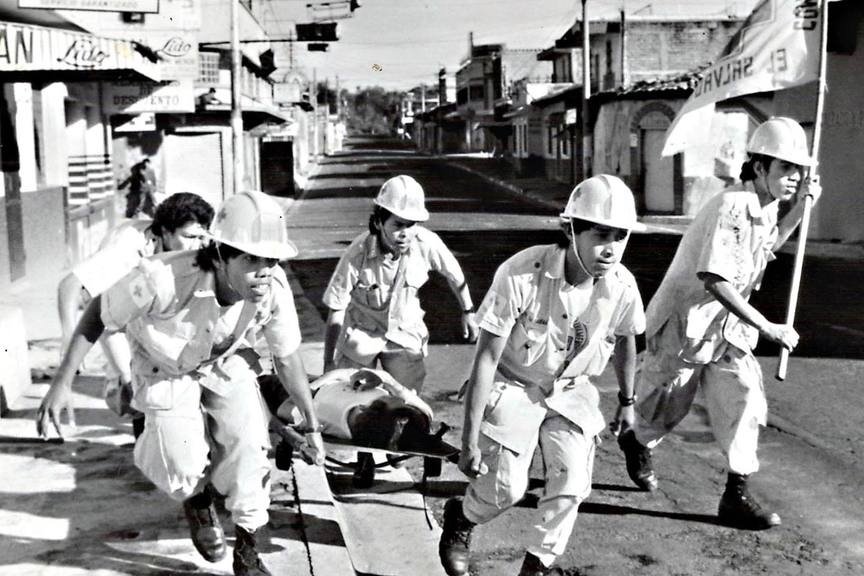
Since 1960, Comandos de Salvamento has stood alongside El Salvador through some of its hardest moments. Earthquakes, hurricanes, floods, accidents, armed conflict and everyday emergencies have shaped a history built above all by volunteers willing to protect life regardless of social background, religion or political views.
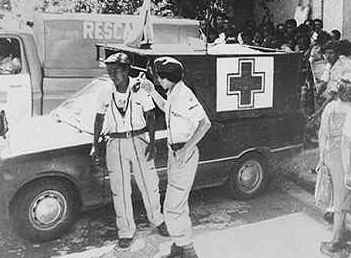
1960 · The beginning
Comandos de Salvamento was founded on 30 September 1960 in Villa Delgado, now Ciudad Delgado, in the department of San Salvador. A group of citizens led by Édgar Cornejo Díaz came together around a simple but demanding idea: to organize a service capable of helping anyone whose life was in danger.
The organization began with water rescue, but the country’s needs soon broadened its work. It also began responding to accidents, fires, earthquakes and other emergencies. The green cross was part of its original identity.
The founder and the early years
Édgar Cornejo Díaz was born in Armenia on 17 June 1932 and died on 24 March 1993, according to the account of his daughter, Gloria Astrid Hurtarte Cornejo, published on this site in 2010. She recalls his experience as a lifeguard for Guatemala’s social security service and the meetings of a small group organizing rescue activities in Ciudad Delgado.
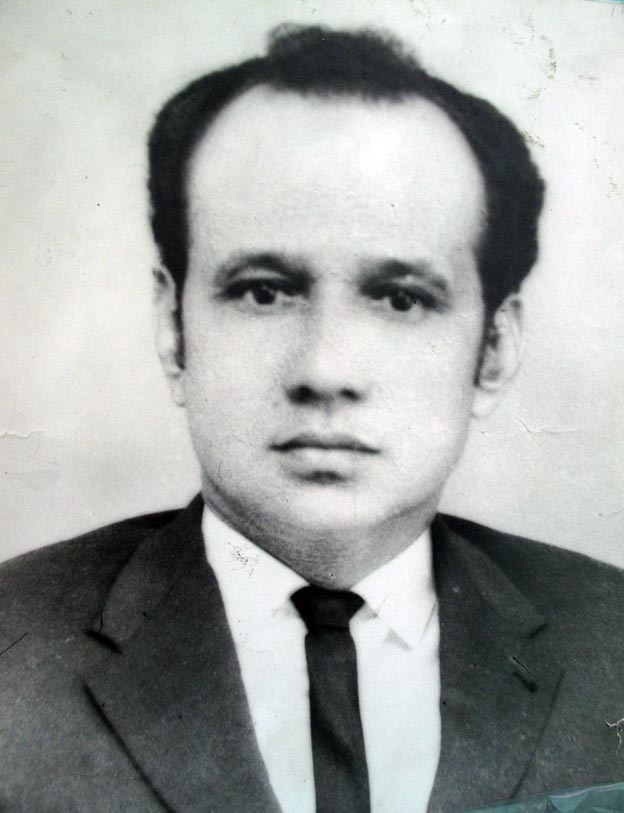
Her account preserves details of an institution that grew with its needs: its first emergency vehicles, the move to a base in El Bosque and later to Cinco de Noviembre Street, and the training of lifeguards to serve on the country’s beaches.
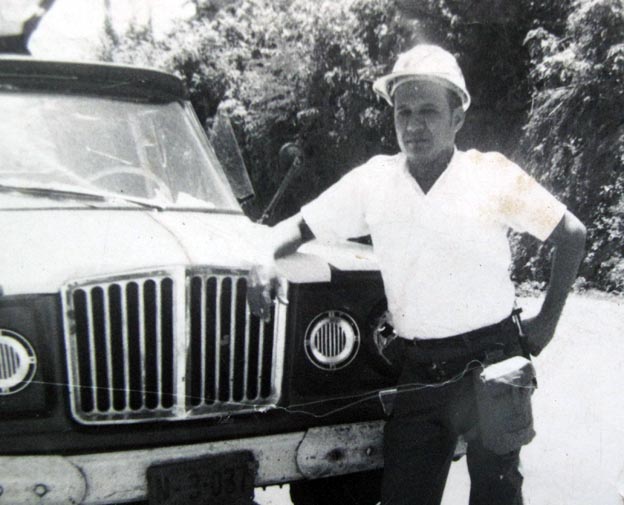
1965–1979 · Learning through response
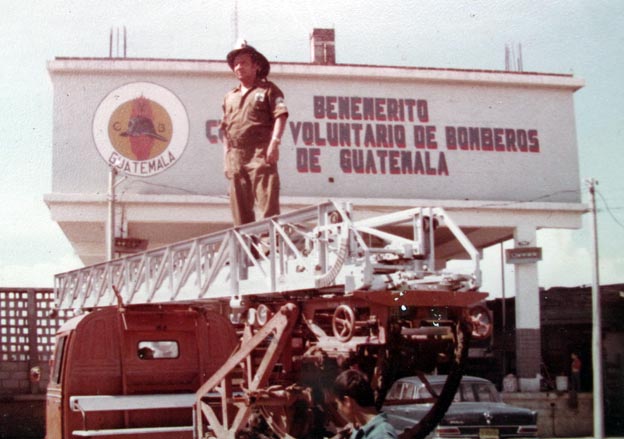
The earthquake of 3 May 1965 was one of the first major tests. With limited resources and a small vehicle adapted as an ambulance, volunteers took part in search, rescue and first aid. In 1969, during the Hundred Hours’ War between El Salvador and Honduras, they treated and evacuated wounded people in border areas.
The following decade strengthened that commitment. Comandos responded to Hurricane Fifi in 1974, and in 1976 Salvadoran volunteers travelled to Guatemala to assist after the devastating earthquake. By the late 1970s, growing social conflict was placing rescuers in increasingly dangerous situations.
1980–1992 · Neutrality amid war
1980 · Aid during Archbishop Romero’s funeral
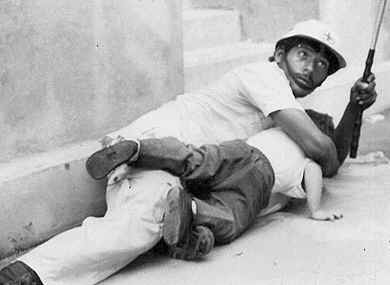
On 30 March 1980, Comandos were outside the Metropolitan Cathedral to provide aid during the funeral of Archbishop Óscar Arnulfo Romero. When army snipers fired on mourners from the National Palace, rescuers treated injured people at the scene and evacuated them in pickup trucks used as ambulances, amid gunfire and panic.
This episode remains part of the memory of the Comandos who experienced it. Archive photographs and the family account of Édgar Cornejo Díaz preserve the fear, the decision to help and the organization of evacuations: protecting life even when their own lives were at risk.
Institutional memory: photographs from the Comandos archive and the account of Gloria Astrid Hurtarte Cornejo, published on this site in 2010. Further documentation: historical account of Archbishop Romero, University of Notre Dame.
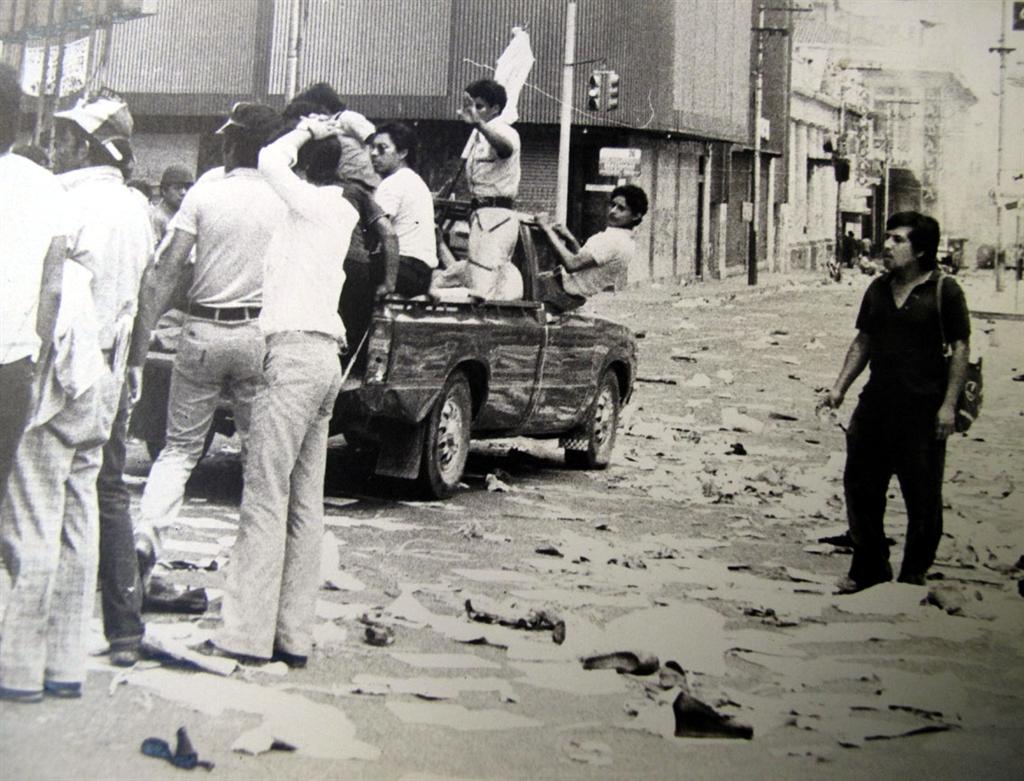
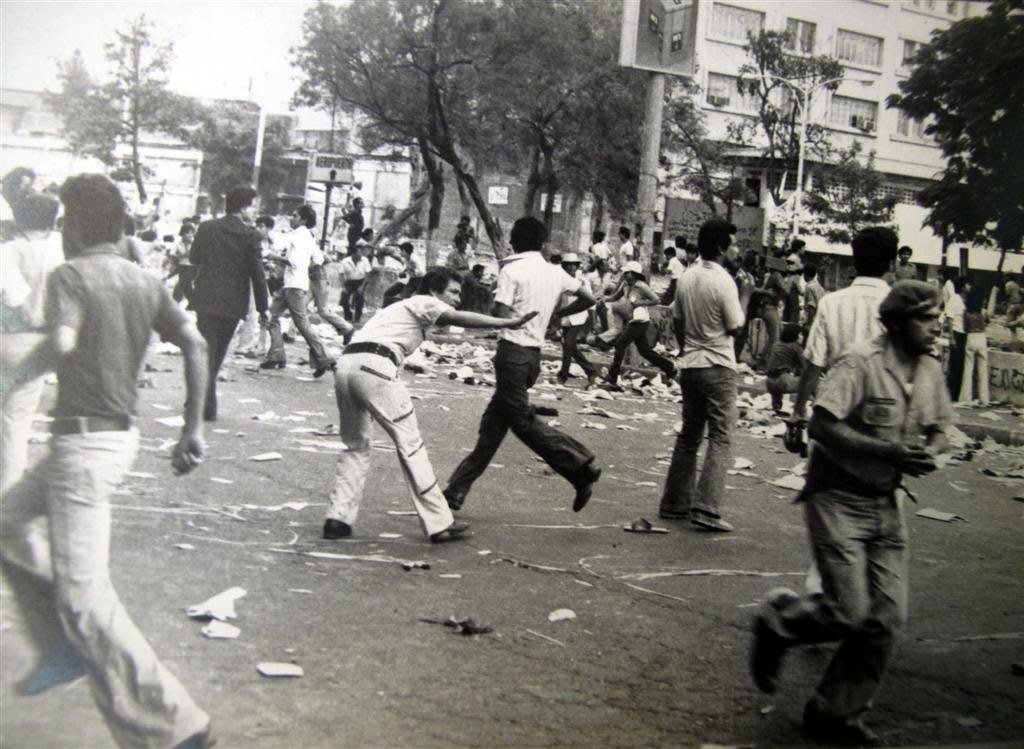
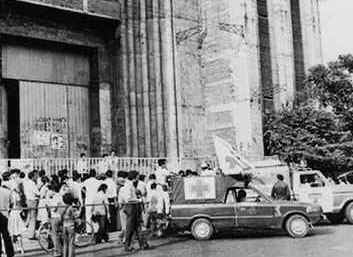
During the civil war, humanitarian neutrality became one of the most important—and most difficult—principles to uphold. For Comandos, an injured person had the right to assistance whether civilian, soldier or guerrilla member. Earning trust on all sides took time and came at a very high human cost: members of the institution died while serving.
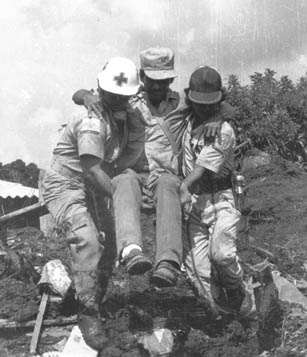
War did not stop natural disasters. In 1982, the Montebello landslide struck communities at the foot of the San Salvador volcano. In 1985, a volunteer mission travelled to Mexico after the major earthquake. A year later, the earthquake of 10 October 1986 again required a massive response within El Salvador.
Why we wear yellow
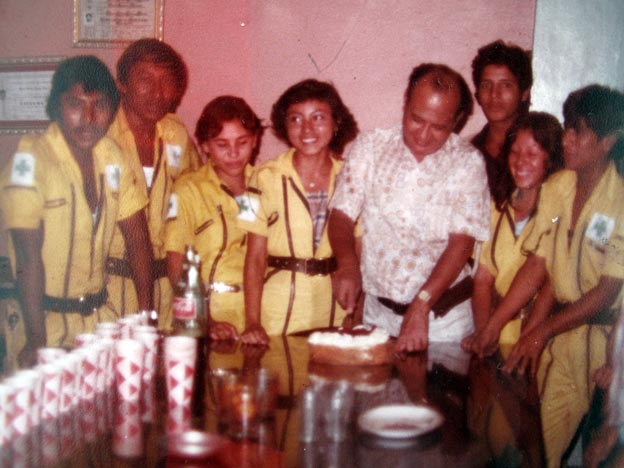
Gloria Astrid recalls that the first uniforms combined white shirts with olive-green clothing. Brown overalls were later used, suited to work that left dirt and blood on clothing. According to her account, her father then chose yellow so that rescuers could be seen from a distance and recognized during the armed conflict, especially at night.
She also recalls the response during Archbishop Romero’s funeral: the rescuers’ fear, their decision to help the wounded and the organization of evacuations. Her account shows the human effort behind every response.
The personal cost of service
In her account, Gloria Astrid describes a search of the family home by National Guard members and threats against her father around 1983. She describes the family’s fear and his declining health during that period. These personal memories show how the dangers of humanitarian work also reached rescuers’ homes.
According to his daughter, Édgar later handed leadership to Roberto Cruz for health reasons. He had known him since he was young and had developed a close relationship with him. The institution’s continuity also rested on these bonds between generations of volunteers.
1989 · The offensive
The November 1989 offensive was one of the most intense chapters in the institution’s history. Fighting reached densely populated areas of San Salvador and its metropolitan area. Ambulances and volunteers treated the wounded, evacuated civilians and entered areas where clashes were continuing.
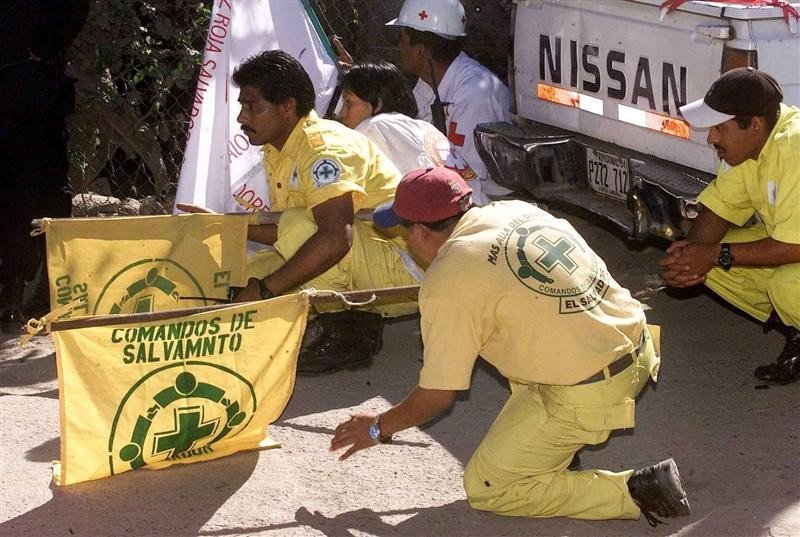
By then, Comandos had grown into an extensive network of local branches and volunteers. The yellow uniform became a recognizable sign amid emergencies: a way to quickly identify those entering a dangerous area to bring others out.
1992–2000 · A different country, new emergencies
The 1992 Peace Accords formally ended the armed conflict, but emergencies did not end. The institution had to adapt to a period marked by traffic accidents, violence, floods, illness and natural disasters.
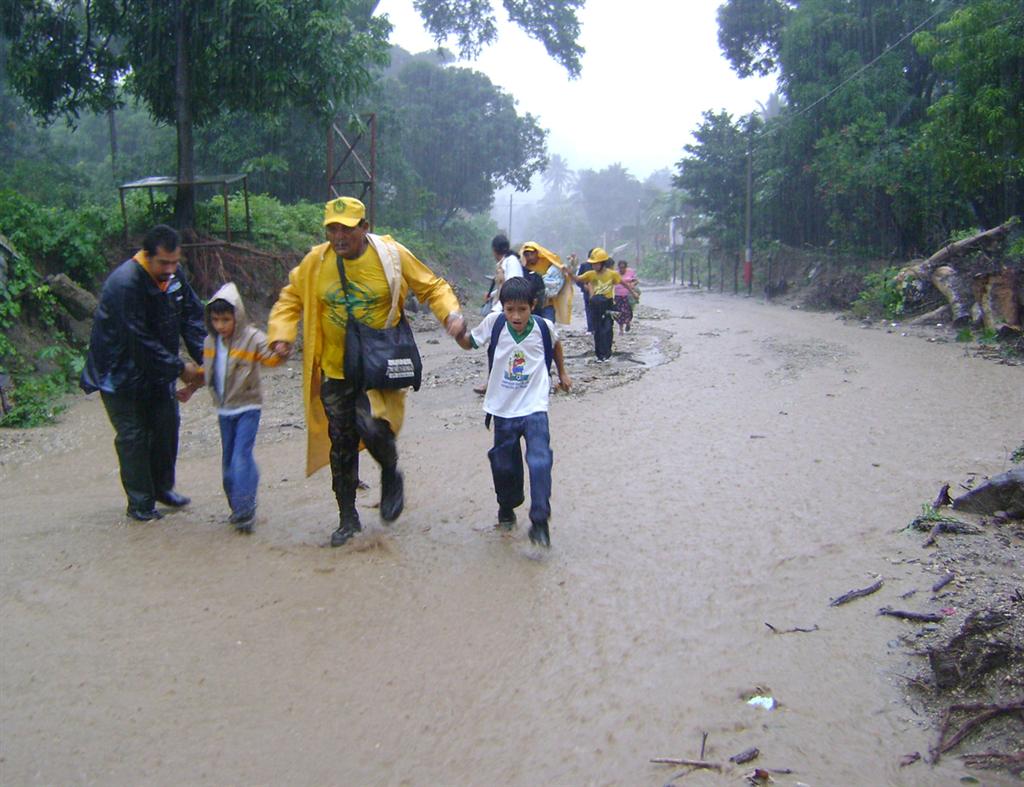
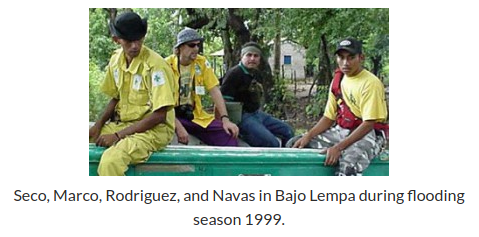
That same year, major flood evacuations began in the Bajo Lempa. In 1995, Comandos joined other institutions in the search and recovery of victims of Aviateca Flight 901 on the Chinchontepec volcano. Floods again struck Bajo Lempa communities, and between 1995 and 1998 the institution helped with public health campaigns against dengue.
In 1998, Hurricane Mitch again required community evacuations, aid distribution and medical care. Response no longer meant only reaching an emergency: it also involved prevention, community training and support after disasters.
2001 onward · Rescue, preparedness and community
The earthquakes of January and February 2001, including the Las Colinas landslide, marked the start of the new century. They were followed by the Santa Ana volcano eruption and Hurricane Stan in 2005, rains associated with Ida in 2009, further floods and landslides, and thousands of everyday emergencies that rarely enter a national timeline.
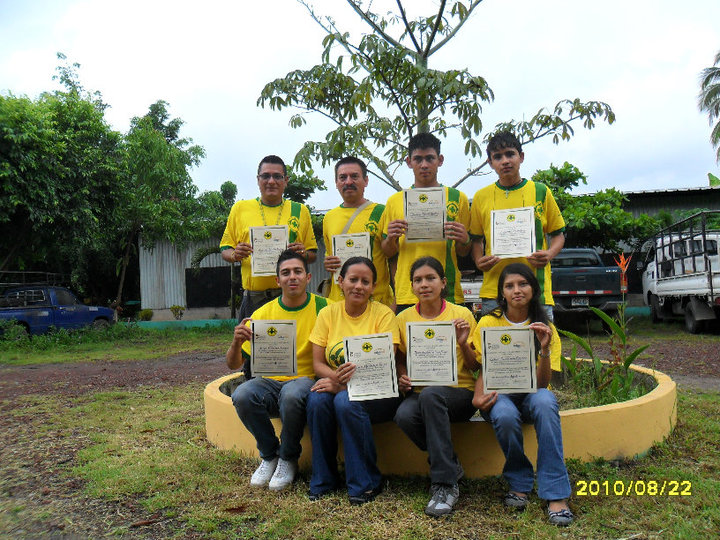
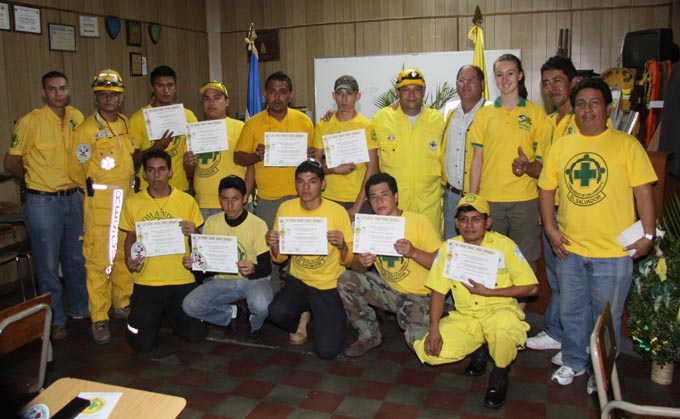
As the National Civil Protection System developed, Comandos worked alongside other response institutions in the country. At the same time, the organization strengthened volunteer training, prehospital care, rescue, disaster preparedness and work with vulnerable communities.
Gang violence and lasting losses
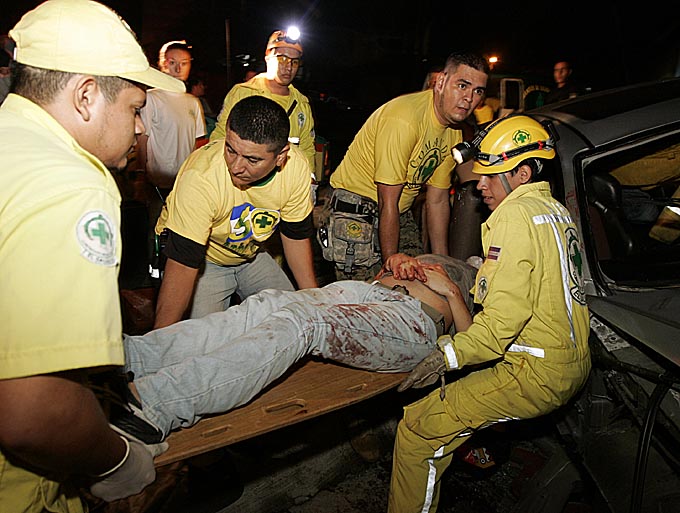
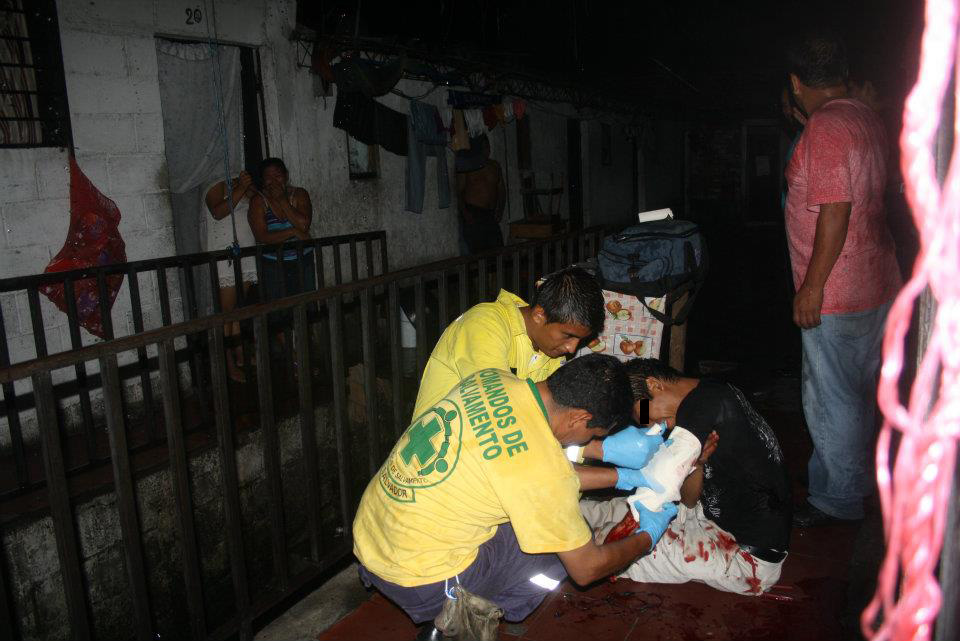
From the mid-1990s and in the following decades, the spread of gangs and armed violence devastated Salvadoran communities. For Comandos, it meant treating victims in increasingly unsafe environments and also suffering the murder of colleagues. Humanitarian neutrality did not protect them from every threat.
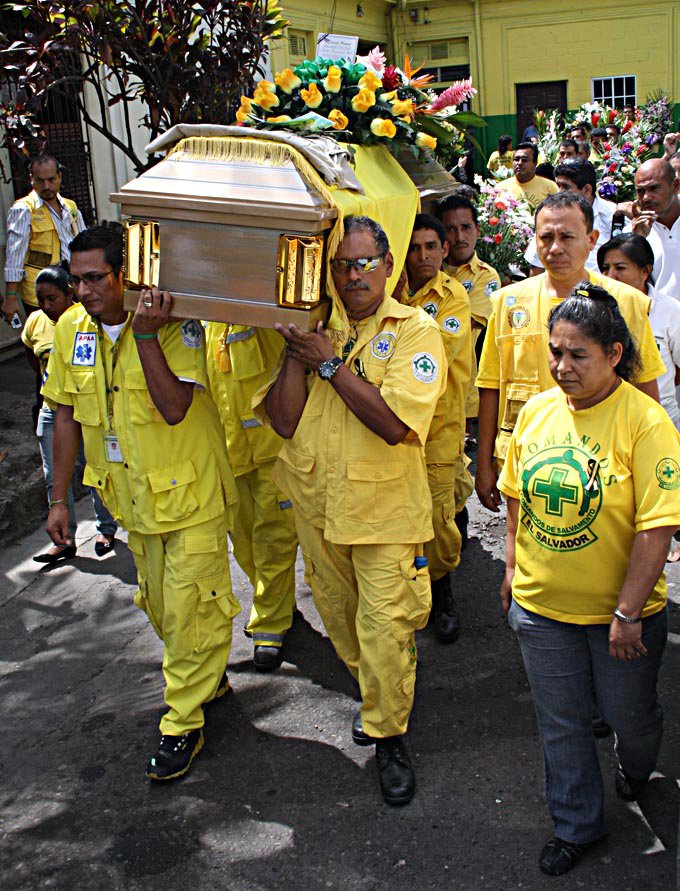
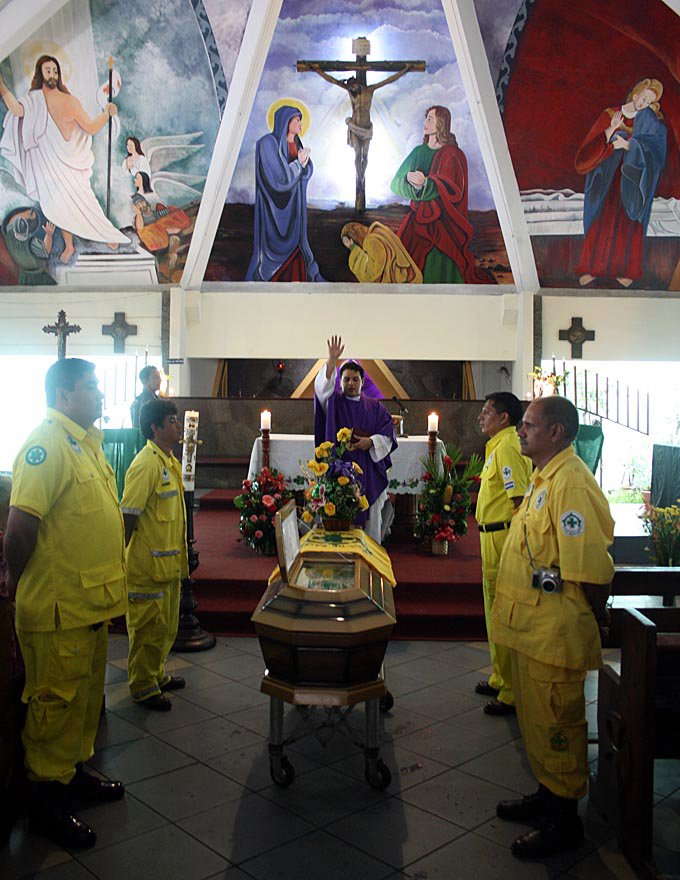
In November 2010, Cristian Neftalí Escalón, a 17-year-old volunteer and son of the head of the Apopa branch, died after being shot by unidentified attackers while travelling with his father. On 10 April 2016, 14-year-old Erick Beltrán was murdered inside the Quezaltepeque branch. The institution condemned that crime as an attack on its neutral work and reaffirmed its commitment to continue helping the public.
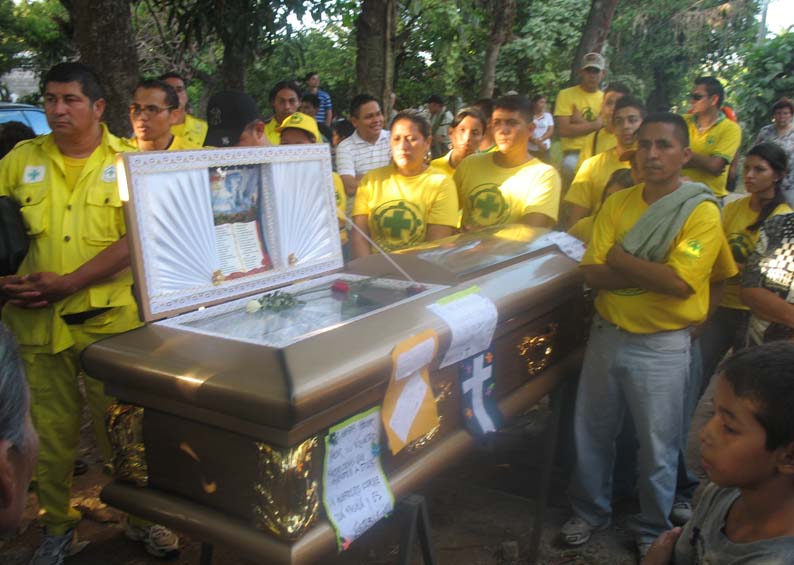
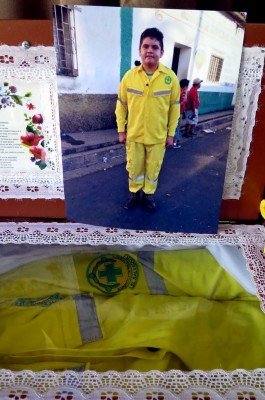
Their memory lives on in our Tribute page and in the post Violence reaches rescue work.
2026 · Humanitarian mission in Venezuela
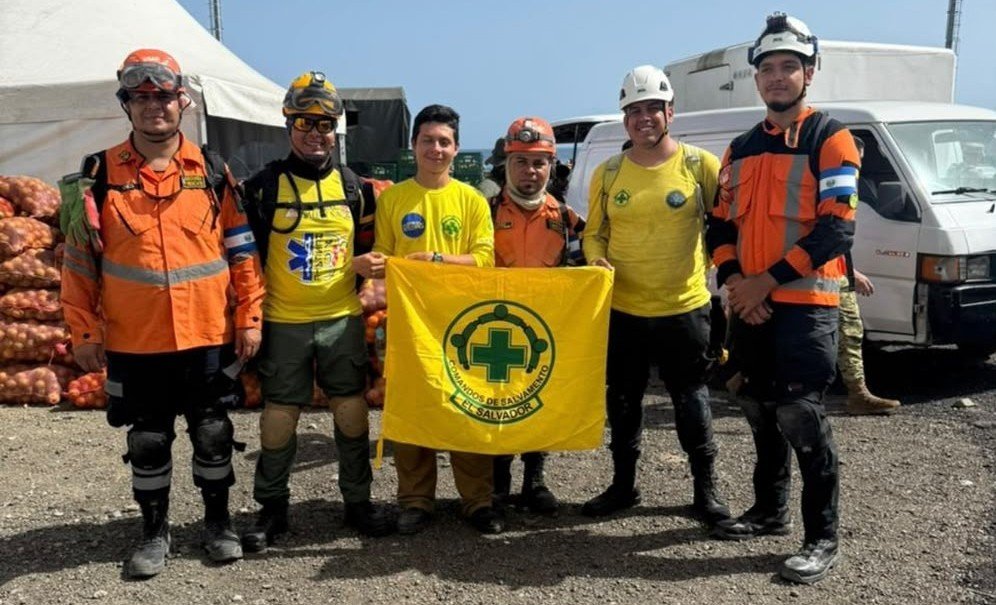
Following the earthquakes of 24 June 2026, ten Comandos volunteers, in two groups of five, took part in the Salvadoran humanitarian mission in Venezuela. They supported search and rescue in affected areas and assisted people coming to the field hospital.
The mission extended the institution’s commitment beyond El Salvador: going where help is needed and working alongside other teams to protect life.
66 years · The same reason to respond
In 2026, Comandos de Salvamento marks 66 years. Vehicles, equipment, techniques and risks have changed profoundly since that first group in Villa Delgado. Yet its purpose remains recognizable: to arrive when someone needs help.
The history of Comandos belongs not only to its leaders or to a succession of major disasters. It is made by generations of men and women—many of them volunteers—who have driven ambulances, carried stretchers, descended ravines, entered combat zones, crossed floods, treated injured people and taught others how to respond to emergencies.
That continuous service connects 1960 with the present: being on the front line to protect life.
Essential timeline
1960 · Founded in Villa Delgado.
1965 · San Salvador earthquake.
1969 · Hundred Hours’ War.
1974 · Hurricane Fifi.
1976 · Rescue mission after the Guatemala earthquake.
1980 · Aid to victims during Archbishop Romero’s funeral; the start of a decade marked by armed conflict.
1982 · Montebello landslide.
1985 · Search and rescue mission after the Mexico earthquake.
1986 · San Salvador earthquake.
1989 · November offensive and evacuations in combat zones.
1992 · Peace Accords and floods in the Bajo Lempa.
1995 · Aviateca Flight 901 crash and floods in the Bajo Lempa.
1998 · Hurricane Mitch.
2001 · Earthquakes and the Las Colinas landslide.
2005 · Santa Ana volcano and Hurricane Stan.
2009 · Emergencies caused by rains associated with Ida.
2026 · 66 years of humanitarian service.